Mind the Confidence Gap: Why Your First Solo Trip Feels Scarier Than It Should
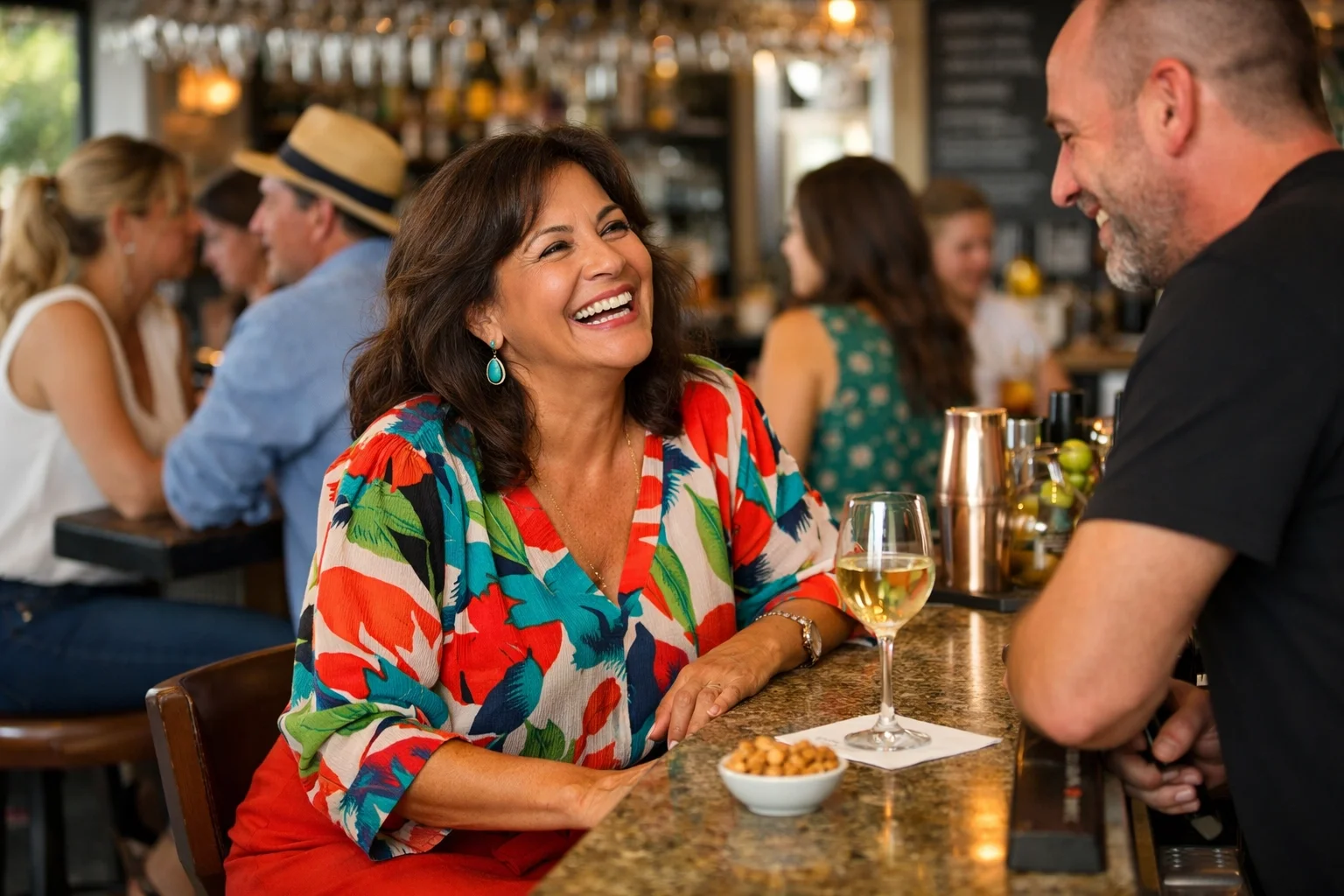
I have been traveling solo for a long time. Years of it.
Enough to know what I'm doing, enough to have figured out the trains and the restaurants and the art of eating alone without performing it. And then four years ago I decided to stop taking two-week trips and start taking two-month ones. Still with just a carry-on.
The confidence issues came right back. Different questions, same voice. Can I actually work from the road for two months? How do you pack for sixty days in one small bag? Can I really be alone that long?
It was all fine. I met people everywhere. Never felt alone. Still packed things I didn't wear. And made more money than I do at home — because I was happier, and less stressed, and it turns out that matters.
I tell you this because the confidence gap does not care how experienced you are. It just changes the questions. Whether you have never left your zip code alone or you have a decade of solo travel behind you, there will be a moment — usually while staring at a half-packed suitcase — when a voice asks if you have lost your mind.
That voice is not wisdom. It is a biological response to a lack of evidence. And the only way through it is the same either way: buy the ticket.
The Brain Loves Evidence and Hates the Unknown
Confidence is not a personality trait. It is a record of successful outcomes. You are confident in your job because you have done it for years. You are confident as a mother or a friend because you have the scars and the stories to prove your capability.
When you contemplate solo travel — whether for the first time or the first time at this scale — you are looking into an empty evidence locker. Your brain scans for "Times I Successfully Worked Remotely for Two Months While Living Out of One Bag" and finds nothing. In the absence of facts, the brain fills the silence with fiction. It invents scenarios involving missed deadlines, overstuffed luggage, and crushing loneliness.
The gap exists because your imagination is working harder than your memory. The fear is a sign that you are expanding your boundaries. It is not a sign that you are incapable.
The Myth of the Fearless Traveler
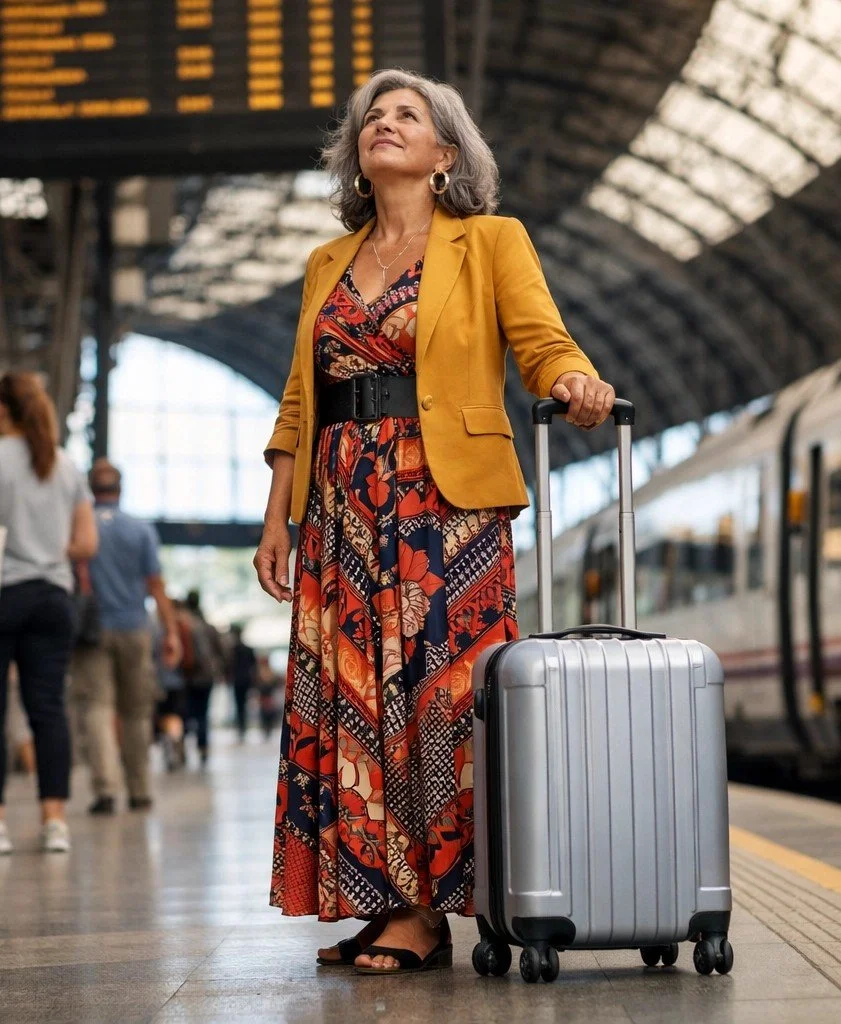
We see images of women standing on mountain peaks or sipping espresso in quiet piazzas. They look serene. They look like they were born with a compass in their hands. They were not. Some seasoned solo travelers will tell you they cried on the first night. Others hit the ground running and never looked back. What they share is not a specific emotional experience — it is the moment of standing at the edge of the unknown and choosing to step off anyway. The fear looks different for everyone. The decision to go is the same.
Once you step onto that plane, the fear changes. It shifts from an abstract dread into a tactical focus. You stop worrying about "what if" and start focusing on "what now."
This shift is where the magic happens. It is where you realize that the problems you feared have simple, logical solutions.
Why the Reality Is More Manageable Than the Fantasy
Your imagination assumes you will be a helpless version of yourself once you cross a border. The opposite is true. When you travel alone, your senses sharpen. You become more observant. You become more resourceful.
Consider the common fears:
Getting lost: You have a smartphone with GPS. You have a tongue to ask for directions. Getting lost in a beautiful city is often the best way to find a hidden bakery or a quiet park.
Dining alone: In reality, no one is looking at you. They are looking at their phones or their partners. Bring a book. Better yet, sit at the bar.
Safety: Use the same common sense you use in your own city. We often treat foreign cities like they are uniquely dangerous when they are simply unfamiliar.
Being alone too long: You won't be. Solo travel has a way of making you more available to other people, not less. You meet people you never would have met with someone else beside you filling the silence.
Bridging the Gap Before You Leave
You do not have to wait until you are in Paris to start building your evidence locker. You can narrow the confidence gap right now.
Practice the table for one: Go to a restaurant in your own town. Sit at a table by yourself. Order a full meal. Do not scroll through your phone the entire time. Notice how it feels. Notice that the world does not end.
The local solo weekend: Book a hotel two towns over. Spend forty-eight hours exploring a place you think you know, but do it entirely on your own terms. This is a low-stakes way to test your systems — including what you actually need in your bag and what you can leave behind.
Audit your skills: Write down three times you handled a crisis at home. A burst pipe. A difficult diagnosis. A work conflict that only you could solve. Those are the same skills you need on the road. Resilience is transferable.
The First Twenty-Four Hour Rule
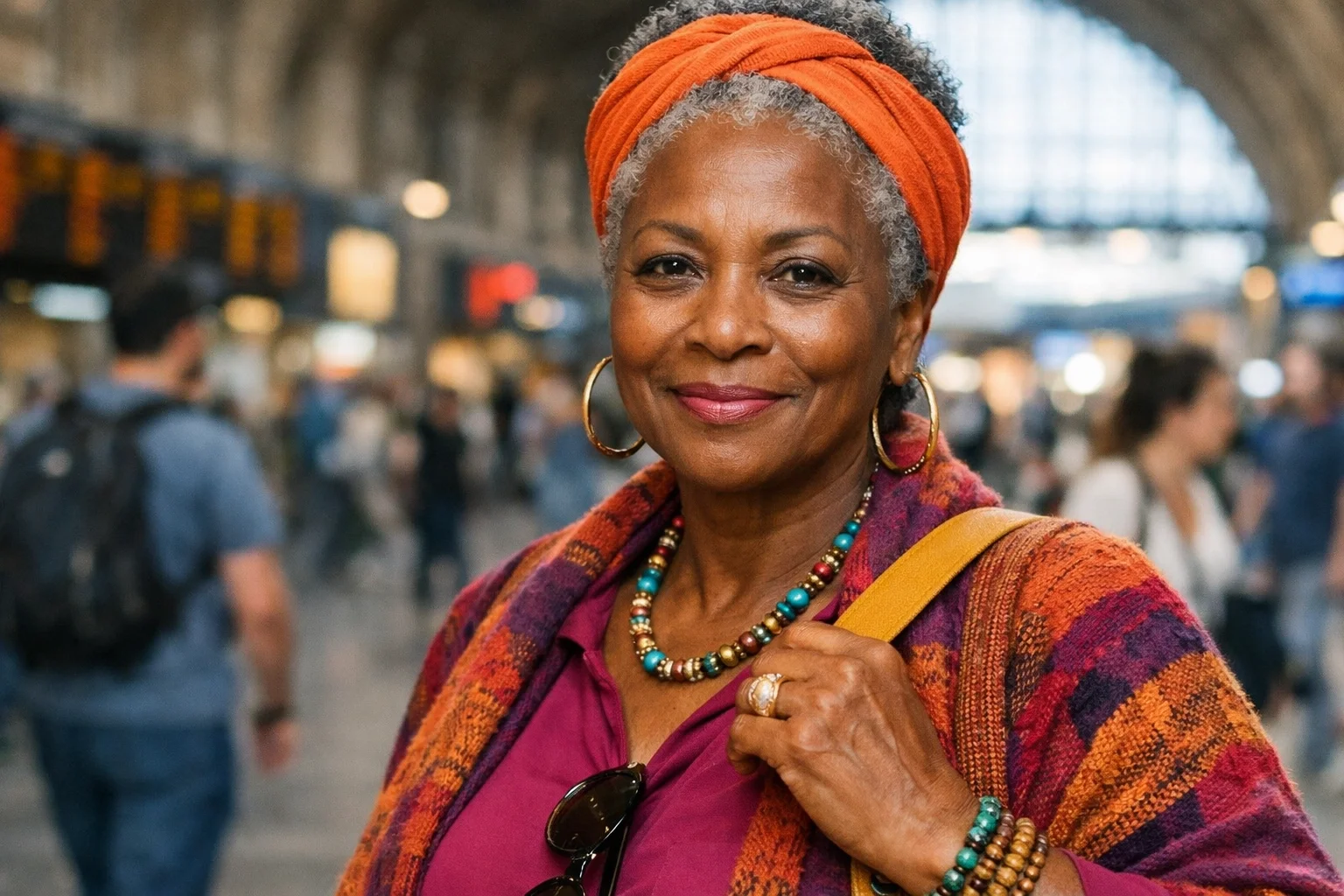
The confidence gap is at its peak during the first day of your trip. Everything is loud. The smells are different. You are tired from the flight. This is when the voice gets loudest.
Give yourself a grace period. Do not try to see the sights on day one. Check into your hotel. Take a shower. Walk to the nearest grocery store for water and snacks. Once you have a successful night of sleep under your belt, the world looks different. The "I could never" starts to melt into "I am doing it."
The Freedom of Being a Stranger
There is a specific kind of confidence that comes from being anonymous. At home, you are defined by your roles — wife, mother, boss, neighbor. You carry the expectations of those roles everywhere you go.
When you travel solo, you are just a woman in a blue coat. No one knows your history. You can change your mind ten times a day without explaining it to anyone. That freedom is not trivial. It is the whole mechanism.
Stop Waiting to Feel Ready
Readiness is a lie. Action is the only thing that creates confidence.
The fear you feel is just energy. It is your body preparing for a challenge. And here is what I know after years of this, after two-week trips and two-month trips and everything in between: the questions change, but the answer is always the same. You figure it out. You meet people. You still pack things you don't wear. And if you let yourself actually be there — unhurried, unburdened, present — you may find you do your best work, too.
Solo travel is not about proving something to the world. It is about proving something to yourself. It is about closing the gap between the woman you are and the woman you know you can be.
The suitcases are in the closet. The world is still there. The only thing missing is you.
Your next steps
Pick a date: Stop saying "someday." Pick a weekend three months from now. Start small: Use our Tactical Travel category to learn the logistics of packing and safety. Download the Starter Kit: If you need a roadmap, our Solo Travel Starter Kit will take the guesswork out of the planning process.
The gap is smaller than you think. One step is all it takes to start closing it.
For gear and preparation, the Solo Travel Starter Kit has what you need.
