How to Pick a Destination for Your First Solo Trip
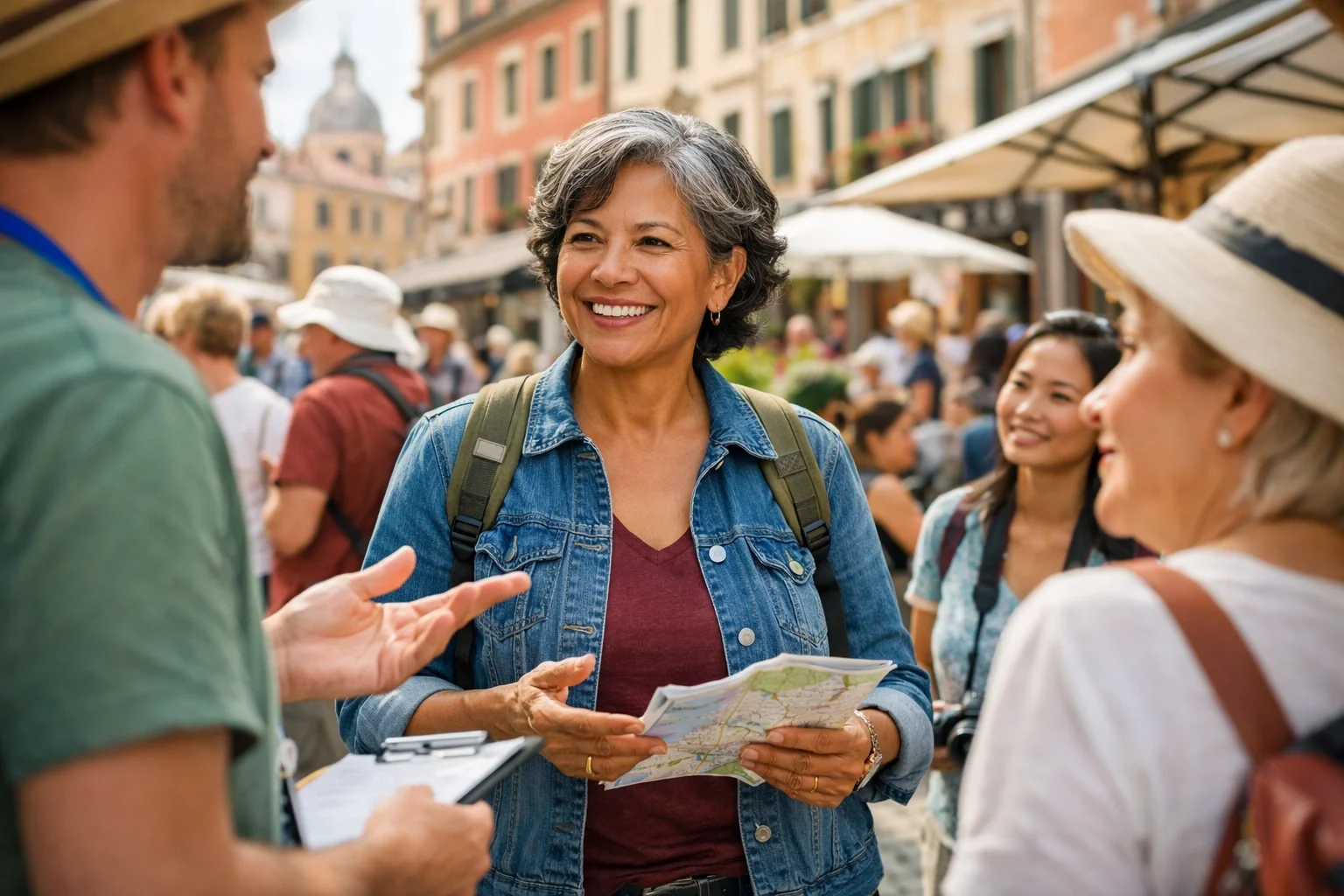
You have a destination. It's been sitting in the back of your head for years, possibly longer. A square somewhere. A coastline. You've pictured the coffee, the light, the particular quality of silence that belongs to mornings in places you've never been.
Then the other voice starts.
That voice is not the problem. It's the same instinct that has held families and careers and complicated situations together for decades. The difference now is that you're applying it to yourself, which turns out to be harder.
Here's the thing: the destination does most of the work. Pick the right place and you spend your energy on the trip. Pick wrong and you spend the whole week managing logistics that should have been invisible.
Feel First, Data Second
Crime statistics are a starting point. A limited one. They don't tell you what it's like to walk back to your hotel at nine on a Tuesday, or whether a neighborhood breathes or holds its breath.
What you want is documented experience — accounts from women who've actually been there. Not worst-case forums, not destination PR. Did they mention catcalling? Did the city feel aggressive, or just indifferent? Is there a working assumption of respect for a woman eating dinner alone that doesn't require her to explain herself?
That last part matters more than the burglary rate.
Look at lighting too. A city that invests in light invests in pedestrians. If you can walk after dinner without a running internal calculation, the whole trip shifts — from endurance to something else.
The Infrastructure Question
For a first trip, logistics should be boring. That's the actual goal.
Three things determine whether they will be: walkability, transit, medical access.
Walkability isn't about sidewalks. It's about whether you can change your mind. A walkable city lets you decide at noon that you'd rather be somewhere else and then go there — no car, no negotiation, no app that may or may not load. Your movement stays yours.
Transit is the backup. Look for a metro or bus system that's legible — clean stations, logical signs, Google Maps that actually works there. If navigating requires local knowledge you don't have yet, that destination goes on the list for later. Your first trip should have a train that comes on time.
Medical access is the pragmatic piece. Reputable hospital nearby? Pharmacies that stock things you recognize? This isn't catastrophizing. It's the same math you apply everywhere else.
Language Is Part of the Infrastructure
If you can ask a question and understand the answer, you are less exposed. That's it.
For a first trip, go somewhere your language is spoken — natively or widely as a second. English proficiency is high across Northern Europe, much of the Caribbean, parts of Southeast Asia. That coverage means you can correct a wrong price, read an exit sign, tell a cab driver where you actually want to go.
Save the language-barrier destinations for when everything else is already easy.

A City That Knows You Exist
Some cities are used to women who eat alone, walk alone, spend an afternoon in a museum alone. Others treat it as a condition requiring comment.
You want the first kind.
Read for solo dining culture. Are single diners unremarkable there? Do cafes have seats that weren't designed as an afterthought? Places with strong professional populations or an established cafe tradition tend to get this without trying.
Also worth noting: easy access to walking tours, a cooking class, a guided half-day — things you can join when you want company and leave when you don't. The best solo trips aren't isolation exercises. They're self-directed. The difference is having the option.
Before You Book
Run your destination through these ten points. Eight or more and you're in good shape.
Can you walk to major sights from a central neighborhood?
Is the political and social climate stable?
Is connectivity reliable — Wi-Fi, cell service?
Can you handle basic needs in your own language?
Is there safe, clean transit available at night?
Is there a documented history of harassment toward women travelers?
Are pharmacies, banks, and grocery stores easy to find?
Are tourist pricing scams the exception rather than the rule?
Does the city feel populated during the day?
Is the layout something you can grasp before you arrive?
A Note on "Safe"
Iceland is among the safest countries on earth. It is also completely strange — black sand, thermal fields, sun that sets at midnight and rises three hours later. Japan's safety record is exceptional. Its culture is dense enough to spend years inside.
The idea that safe destinations are somehow lesser is a myth that has cost people good trips.
When you're not running a background check on your surroundings every twenty minutes, you notice things. The light. The way a street looks when you're not afraid of it. That's the whole point of picking carefully in the first place.
Next
The destination is the first decision. Once it exists, everything else has somewhere to attach — neighborhoods, days, the shape of the thing.
Next up: five specific places that pass this test. Not compromises. Actually good.
If you're still in the thinking stage, the Solo Travel Starter Kit is a practical place to start.
The trip is real. Pick the place and the rest follows.
If you are ready to plan your next journey and want to ensure every detail is handled with this level of precision, contact us today. We will get you where you need to go.
